
Exhaust Manifold

Выпускной коллектор

Colector de Escape
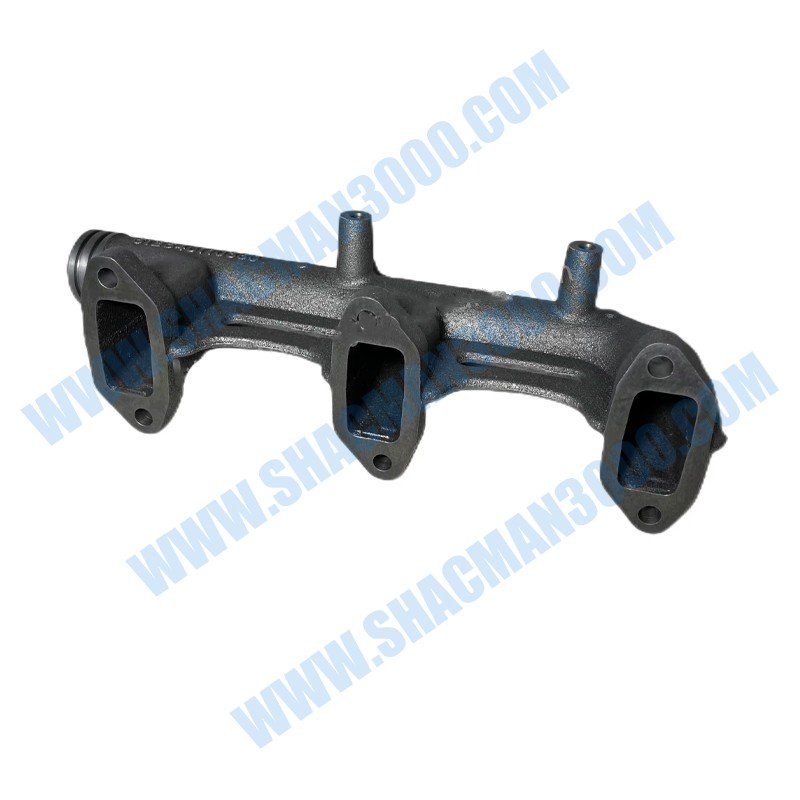
The Shacman Exhaust Manifold BY1000874534 is a critical, high-performance engine component designed to maximize exhaust gas evacuation and turbocharger efficiency. This genuine OEM part, identified by the precise number BY1000874534, collects hot exhaust gases from each cylinder and merges them into a single stream, optimizing flow dynamics for improved engine power and fuel economy. A leak or crack in this component can lead to significant performance loss, increased emissions, and potential damage to the turbocharger. For heavy-duty Shacman trucks operating under strenuous conditions, ensuring the integrity of the exhaust manifold is paramount. This part is engineered to withstand extreme thermal cycling and vibration, providing reliable service over long distances.
Constructed from specialized high-grade cast iron alloys, it offers superior resistance to heat distortion and corrosive exhaust byproducts. Its precise casting ensures perfect alignment with cylinder head ports and turbocharger inlets, guaranteeing an airtight seal and efficient operation. Choosing the correct OEM part is essential for maintaining engine specifications and avoiding costly downtime.
| Parameter | Specification / Value |
|---|---|
| OEM Part Number | BY1000874534 |
| Product Name | Exhaust Manifold |
| Brand | Shacman |
| Primary Material | High-Strength Nodular Cast Iron / SiMo Alloy |
| Compatible Engine Models | Shacman WP10H, WP12H Series (High-Power Variants) |
| Number of Ports | 6 (For Inline-6 Cylinder Engines) |
| Outlet Connection | T4 Turbo Flange (Standard), V-Band Optional |
| Maximum Continuous Temperature | Up to 850°C (1562°F) |
| Surface Finish | Heat-Resistant Cast Surface, May Include Ceramic Coating |
| Weight (Approximate) | 18-22 kg (Model Dependent) |
The exhaust manifold’s primary role is to efficiently collect pulsating exhaust gases from each cylinder. It must manage these pulses to minimize backpressure and maximize scavenging effects.
Scavenging refers to the process where outgoing exhaust gases help draw in fresh air during valve overlap. A well-designed manifold enhances this, boosting volumetric efficiency.
The Shacman BY1000874534 is engineered with tuned runner lengths and a optimized collector. This design harmonizes exhaust pulses, reducing turbulence and improving flow velocity.
This results in more complete cylinder emptying and better filling on the intake stroke. The engine can produce more power and torque while running cleaner and more efficiently.
The manifold delivers exhaust energy to the turbocharger turbine wheel. Efficient, high-velocity flow is crucial for rapid turbo spool-up and reduced lag.
A cracked or leaking manifold allows precious exhaust energy and pressure to escape. This directly slows turbine acceleration, hurting low-end response.
The genuine BY1000874534 ensures a sealed, high-energy path from cylinders to turbo. This maintains boost pressure consistency across the engine’s operating range.
This manifold is cast from specialized alloys like nodular cast iron or silicon-molybdenum (SiMo) iron. These materials offer exceptional resistance to thermal fatigue.
Thermal fatigue occurs from repeated heating and cooling cycles, which can cause standard cast iron to crack. The alloy in BY1000874534 is designed to withstand this stress.
The material also has high creep resistance at elevated temperatures. This means it maintains its shape and sealing surface integrity under constant heat and load.
Some variants may feature a ceramic-based thermal barrier coating. This coating helps retain heat within the exhaust stream, improving turbo efficiency and protecting under-hood components.
Diesel exhaust contains corrosive elements like sulfur compounds and moisture. The manifold’s material composition is formulated to resist chemical attack and oxidation.
Over time, oxidation can cause surface scaling and pitting, which may lead to weak points. The high-quality cast of the genuine part minimizes internal porosity that accelerates this process.
Proper engine operation, avoiding excessive fuel dilution in oil, also contributes to manifold longevity. A healthy engine produces fewer corrosive byproducts.
Every dimension of the BY1000874534 manifold is controlled to tight tolerances. This ensures perfect alignment with the cylinder head’s exhaust ports and the mounting studs.
Misalignment can cause immediate gasket failure, leading to exhaust leaks. It can also place stress on the cylinder head, potentially causing warping or cracks over time.
The flange that connects to the turbocharger is machined flat and true. This provides a solid, leak-free mating surface for the turbo gasket or V-band clamp.
Using the correct OEM part eliminates guesswork during installation. Technicians can be confident the part will fit without modification, saving time and preventing errors.
Modern Shacman engines rely on precise sensor data. The exhaust manifold may house or be near critical sensors like the Exhaust Gas Temperature (EGT) probe.
The genuine manifold ensures sensor bosses are correctly positioned and threaded. This guarantees accurate temperature readings for the Engine Control Unit (ECU).
Incorrect readings from a poorly positioned sensor can trigger fault codes. It may also cause the ECU to enact incorrect fueling or emissions strategies.
Installation of a new exhaust manifold is a technical task. Always allow the engine to cool completely to avoid burns and thermal distortion of components.
Begin by safely supporting the vehicle and disconnecting the battery. Remove necessary components for access, such as the turbocharger, heat shields, and exhaust pipes.
Carefully remove the manifold mounting nuts. Applying a penetrating solvent beforehand can help free corroded studs and prevent breakage, which complicates repair.
Thoroughly clean the cylinder head mating surface. All old gasket material and carbon deposits must be removed to ensure a flat, clean seal for the new gasket.
Always use a new, genuine exhaust manifold gasket. Do not use sealants unless specifically recommended by Shacman for that application.
Place the new BY1000874534 manifold carefully onto the studs. Hand-tighten all nuts to ensure even seating before final torquing.
Follow the manufacturer’s specified torque sequence and values exactly. This is typically a star pattern, progressing in incremental steps to the final torque setting.
Proper torquing prevents warping and ensures even clamping force across the gasket. Re-torque the nuts after the first heat cycle as specified in the service manual.
Audible symptoms are often the first indicator. A distinct ticking or tapping noise from the engine bay, synchronized with engine speed, suggests an exhaust leak.
This noise may be louder when the engine is cold, as metal contracts and leak gaps are larger. It might lessen as components expand from heat, but the leak remains.
Visible signs include black soot streaks around the manifold flanges or on adjacent components. This is carbon residue from escaping exhaust gases.
In severe cases, you may see heat discoloration (blue or yellow tints) or even visible cracks on the manifold casting. These are clear signs the part needs replacement.
A noticeable loss of engine power, especially under load, can indicate a manifold leak. The engine struggles to build proper boost due to lost exhaust energy.
Increased fuel consumption is another consequence. The ECU may compensate for perceived conditions by enriching the fuel mixture, reducing efficiency.
The smell of exhaust fumes in the cabin or around the truck is a serious safety concern. It indicates a leak that could allow carbon monoxide ingress.
Check Engine Light illumination with codes related to exhaust gas temperature anomalies or turbocharger under-boosting can also point to manifold issues.
Aftermarket manifolds often prioritize low cost over durability. They may use lower-grade casting iron with higher impurity content and less controlled processes.
This can lead to internal porosity, inconsistent wall thickness, and inherent weak spots. These flaws become failure points under the stress of daily operation.
Dimensional accuracy is frequently compromised in non-genuine parts. Port shapes may not match perfectly, creating flow restrictions and increasing backpressure.
The genuine BY1000874534 is produced under Shacman’s strict quality control. It undergoes pressure testing, dimensional checks, and material analysis to ensure reliability.
The initial savings from a cheap manifold are often erased by premature failure. The cost of a second replacement, plus additional labor, far exceeds the price difference.
A failed manifold can cause collateral damage. Escaping high-temperature gases can melt wiring, damage engine mounts, or even cause under-hood fires.
Downtime for a commercial truck is a direct financial loss. The genuine part offers predictable service life, supporting fleet scheduling and profitability.
A properly functioning exhaust manifold is foundational for modern emissions systems. It ensures exhaust gases reach the after-treatment devices at the correct temperature and flow rate.
For Diesel Particulate Filters (DPF), consistent high temperature is needed for regeneration. A leaking manifold can lower exhaust gas temperature, causing incomplete regenerations.
Selective Catalytic Reduction (SCR) systems rely on precise NOx sensor readings. Leaks can introduce false air, skewing readings and causing incorrect urea dosing.
Using the genuine BY1000874534 helps maintain the integrity of the entire emissions control chain. This is crucial for passing environmental inspections and avoiding penalties.
Efficient exhaust flow reduces engine work required to expel gases, indirectly lowering fuel consumption and CO2 emissions. Every component optimized for efficiency matters.
By ensuring the after-treatment system works optimally, the manifold helps minimize tailpipe emissions of NOx, particulate matter, and other pollutants.
For fleets with sustainability goals, maintaining every engine component, including the manifold, is part of responsible operation and environmental stewardship.
Incorporate exhaust manifold inspection into regular maintenance schedules. During service, visually check for signs of soot, cracks, or warpage.
Listen for abnormal exhaust noises, especially during cold starts. Early detection of a small leak can prevent it from developing into a major failure.
Ensure the engine cooling system is always in top condition. Overheating is a primary cause of excessive thermal stress on exhaust components.
Check the tightness of manifold mounting nuts during major engine overhauls, following the re-torque specifications if provided. Do not over-tighten.
Use the correct engine oil and change it at recommended intervals. Poor oil quality can lead to increased carbon buildup in the exhaust system.
Avoid operating the engine with misfires. Unburned fuel entering the exhaust can cause extreme localized heating, potentially warping or cracking the manifold.
Ensure the exhaust system is properly supported by all hangers and brackets. A sagging system can place mechanical stress on the manifold flanges.
The Shacman Exhaust Manifold BY1000874534 is a precision-engineered component vital for engine power, efficiency, and emissions compliance. Its role extends beyond simple gas collection.
Choosing the genuine OEM part is a direct investment in the long-term health and productivity of your Shacman truck. It guarantees fit, function, and durability under heavy loads.
Do not compromise on this foundational part of the exhaust system. Specify part number BY1000874534 for all replacements to ensure your engine breathes efficiently and performs optimally.
Combine this genuine component with professional installation and proactive maintenance. This holistic approach maximizes uptime, protects your investment, and ensures your Shacman truck delivers reliable power mile after mile.