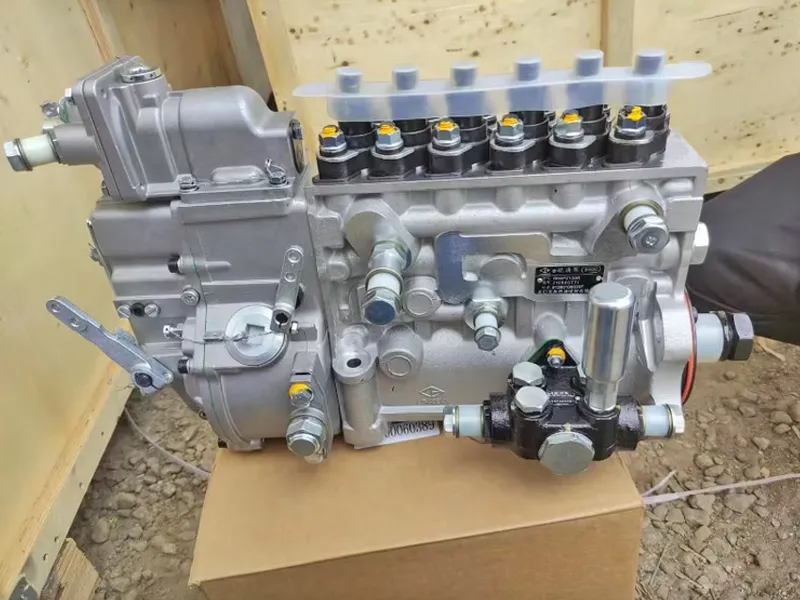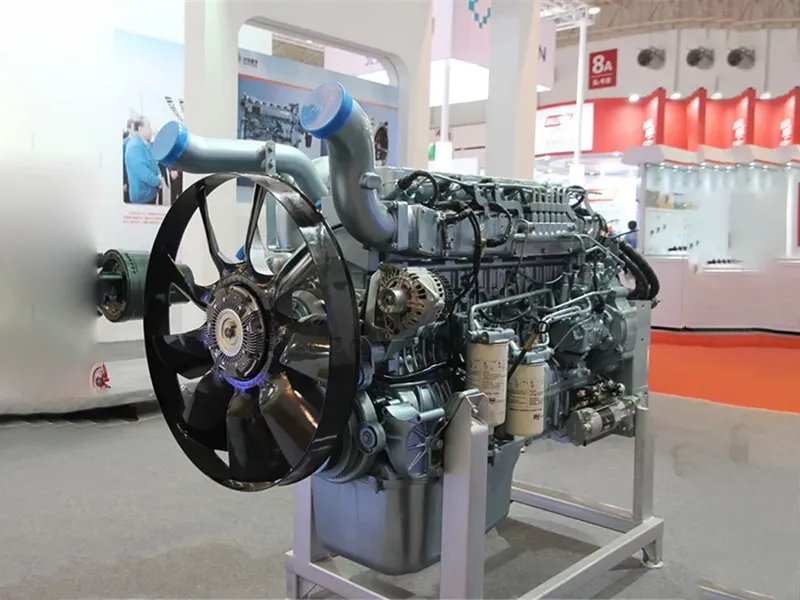

The journey begins in the fuel tank. A transfer pump (lift pump) draws diesel and pushes it through a critical multi-stage filtration system. This typically includes a primary filter/water separator and a main secondary fine filter. For the sensitive SHACMAN Fuel Injection System, immaculately clean fuel is non-negotiable. This step removes water and microscopic contaminants that could cause catastrophic damage to high-precision components.

Filtered fuel (at ~4-6 bar) then enters the high-pressure pump, often a radial piston pump driven by the engine. This is the powerhouse of the SHACMAN Fuel Injection System. It compresses the fuel to extreme pressures, typically between 1,600 to 2,500 bar. Its sole function is to maintain this immense pressure in the next component, the common rail. The pump’s operation is constantly monitored and adjusted by the ECU.
The “common rail” is a thick-walled, high-pressure manifold that runs along the cylinder head. It acts as a pressure accumulator and stabilizer for the entire SHACMAN Fuel Injection System. It stores the high-pressure fuel and dampens pressure pulses from the pump, ensuring a stable supply is available to all injectors simultaneously. A rail pressure sensor and a pressure control valve work with the ECU in a closed loop to maintain the exact pressure required for current engine load and speed.


The ECU is the absolute brain of the SHACMAN Fuel Injection System. It processes real-time data from dozens of sensors (crankshaft/camshaft position, boost pressure, air mass, coolant temp, throttle position). Using this data, it calculates with millisecond precision the optimal injection timing, duration, and pressure. It then sends command signals to the injectors and regulates the pressure control valve on the rail.
The final actors are the fuel injectors. These are not simple nozzles but complex electro-hydraulic valves. Upon receiving a high-voltage pulse from the ECU, a solenoid or piezo actuator inside the injector opens a needle valve. High-pressure fuel from the common rail is then forced through micro-scopic holes in the injector tip, atomizing it into an extremely fine mist for perfect mixing with air in the combustion chamber. The precision of the SHACMAN Fuel Injection System injectors is astounding.
The precise metering and optimal atomization of the SHACMAN Fuel Injection System lead to near-complete combustion. This can improve fuel efficiency by 10-12% compared to older mechanical systems, offering massive savings in operational costs for fleet operators.
By enabling multiple injection events (pilot, main, post) and perfect combustion, the system drastically reduces particulate matter (soot) and nitrogen oxides (NOx). This allows SHACMAN trucks powered by this Fuel Injection System to meet stringent Euro IV, V, and VI emission standards.
Constant high pressure from the common rail means fuel can be injected optimally at any engine speed. This delivers high torque at low RPMs, perfect for heavy loads, steep grades, and difficult terrain. The engine runs smoother and quieter due to pilot injection.
The robust design of the SHACMAN Fuel Injection System, coupled with the adaptive logic of the ECU, ensures reliable operation in extreme conditions—from freezing cold to desert heat. The system can also compensate for variations in fuel quality to a certain degree, protecting the engine.
A unique capability of the modern SHACMAN Fuel Injection System is performing several injections within a single engine cycle, commanded by the ECU:
A tiny amount of fuel is injected before the main event. This initiates a gentle pressure rise, reducing noise and vibration (“diesel knock”).
The primary injection event that delivers the power. Its timing and duration are precisely calculated for maximum efficiency and power.
A small injection after combustion to increase exhaust temperature, actively helping to burn off soot in the Diesel Particulate Filter (DPF) during regeneration.
The performance and longevity of the SHACMAN Fuel Injection System are directly tied to proper maintenance. Follow these critical practices:
Adhering to these guidelines will ensure your SHACMAN truck’s engine delivers peak performance and reliability for years to come. For comprehensive technical specifications and support, learn more about the official resources available.
The SHACMAN Fuel Injection System represents the pinnacle of diesel engine technology. By adopting the High-Pressure Common Rail architecture with full electronic control, it provides an unmatched combination of power, efficiency, and environmental compliance. Whether navigating a mining site, climbing a mountain pass, or hauling cargo cross-country, the sophisticated control of the SHACMAN Fuel Injection System ensures that every drop of fuel is used to its maximum potential. For operators, this translates directly to lower operating costs, higher uptime, and a powerful, responsive driving experience. The reliability built into the SHACMAN Fuel Injection System is a testament to SHACMAN’s commitment to building trucks that conquer the toughest challenges on Earth.
Understanding this system is the first step toward optimizing its performance and ensuring the long-term success of your heavy-duty operations.